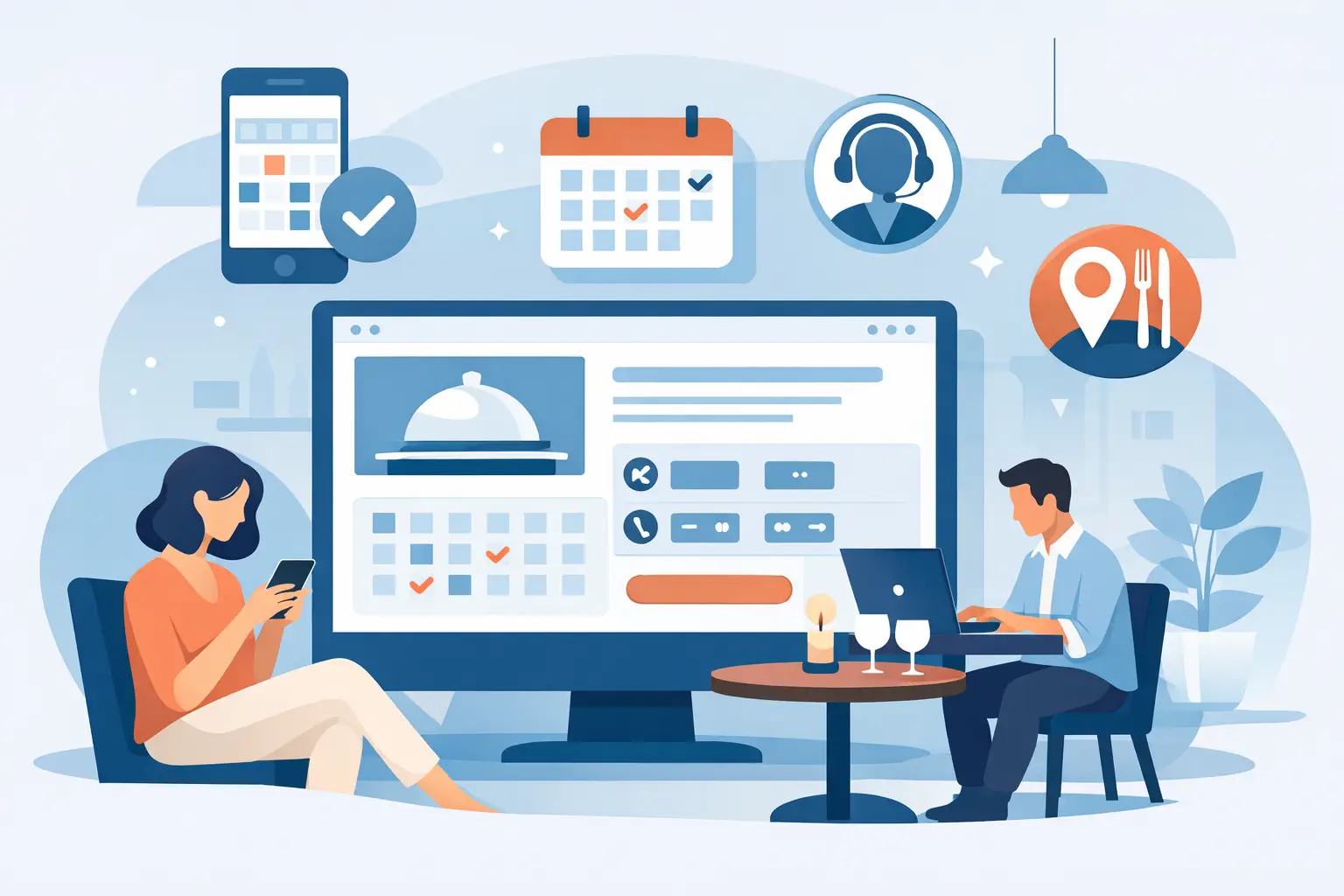
Friday at 6:12 PM is not the time for a restaurant website to get cute. Someone is on their phone, trying to book a table in under a minute. If your restaurant website design for reservations makes them pinch, scroll, hunt for buttons, or wait on a slow page, they do not become a guest. They pick the place down the street.
That is the real job of a restaurant website. Not to impress other restaurant owners. Not to win design awards. It needs to turn intent into booked tables, especially on mobile, especially during high-demand hours, and especially when the customer is making a fast decision.
What restaurant website design for reservations should actually do
A reservation-focused site has one primary job: reduce friction between interest and action. Everything else is secondary.
That means your menu matters, your photos matter, and your brand matters, but they only matter if they support the booking decision. A beautiful homepage that buries the reservation button under a full-screen video is not helping. Neither is a stylish layout that forces users through three extra taps before they can see available times.
Good restaurant websites are built around customer behavior. Most people are looking for a few things fast: location, hours, menu, vibe, and whether they can get a table. If your design respects that sequence, reservations go up. If it fights that sequence, conversion drops.
There is always some trade-off here. Fine dining spots may need more storytelling and stronger visual presentation because guests are buying an experience, not just a meal. Fast casual brands can be more direct. But both still need the same core rule: the reservation path must be obvious, fast, and available from every key page.
The biggest mistakes in restaurant website design for reservations
The first mistake is treating the reservation feature like a nice add-on instead of the main conversion event. Too many restaurant sites give equal visual weight to everything, so the guest has no clear next step.
The second is overdesign. Heavy animations, oversized image sliders, auto-playing media, and trendy layouts often get in the way of bookings. They may look polished in a desktop mockup. They perform badly when a customer is standing on a sidewalk with one bar of service and friends waiting for an answer.
The third is weak mobile execution. For many restaurants, the majority of reservation intent comes from phones. If the booking widget is clunky, if text is too small, or if popups block the screen, you are losing revenue in the most important moment.
Another common issue is split attention. Some sites push delivery, catering, events, gift cards, loyalty programs, and reservations with the same priority. Those offers may all matter, but the homepage should not feel like a traffic jam. The right move depends on the business model. A neighborhood bistro may lead with reservations. A pizza shop may lead with online ordering. A steakhouse with a private dining program may need to separate guest paths clearly so each action has its own lane.
The pages that drive more booked tables
Most owners think about the homepage first. Fair enough. But reservations often depend on how the full site works together.
Your homepage should answer the basics fast and give the reservation button top billing. The header should keep that action visible, and the first screen should make it obvious what kind of restaurant this is, where it is, and what to do next.
Your menu page is more important than many designers admit. It is one of the most visited pages on a restaurant site, and it often sits right before a reservation decision. If the menu is buried in a PDF, hard to read on mobile, or out of date, trust drops. A clean, searchable, mobile-friendly menu keeps momentum moving toward the booking.
Your location and contact page should not be an afterthought either. Parking info, neighborhood cues, hours, phone number, and map details reduce uncertainty. People book faster when they feel confident about logistics.
For higher-ticket concepts, gallery and private dining pages also matter. But they need to support action, not distract from it. Great visuals can increase conversion when they build appetite and credibility. Too many visuals, especially when they slow down the site, do the opposite.
What high-converting reservation UX looks like
The best reservation UX feels almost boring, and that is a compliment. Users see the button. They tap it. They choose a time. Done.
Start with persistent calls to action. A reservation button should appear in the top navigation, stay visible on mobile, and be repeated naturally throughout the site. You do not need ten different phrases competing for attention. Pick one primary action and stay consistent.
Then reduce the number of decisions before the booking starts. Do not make users read a long brand story just to find the widget. Do not hide reservations inside a contact page. And do not force account creation if it is avoidable.
Speed matters more than many owners realize. Every extra second loads more doubt into the process. If pages drag, users bounce. If your reservation flow opens in a broken mobile frame or loads like it was built five years ago, people assume the experience at the restaurant may be just as sloppy.
There is also a trust layer. Clear confirmation messaging, polished mobile formatting, accurate hours, and up-to-date menus all signal that the business is active and well run. Reservation conversion is not only about button placement. It is about confidence.
Design choices that help reservations instead of hurting them
Photography should sell the experience, but it should not dominate the action path. Use strong hero images, food photography, and atmosphere shots with purpose. Show enough to create desire, then get out of the way.
Typography should be readable on a phone without effort. That sounds obvious, yet many restaurant sites still use low-contrast text, small fonts, and script-heavy branding that looks better in a mood board than on a mobile screen.
Navigation should stay simple. Home, Menu, Reservations, Private Dining or Events, Location, Contact. Most restaurants do not need a maze of pages. More pages do not mean more value. They often mean more confusion.
The same goes for copy. Sharp, useful copy beats clever copy. Tell visitors what kind of experience you offer, where you are, when you are open, and how to book. Save the brand poetry for places where it adds value.
The business side of reservation-focused design
This is where a lot of agencies miss the point. A restaurant website is not a digital brochure. It is a revenue system.
If your average reservation leads to a table spend that matters to your margins, then even small conversion improvements pay off fast. More completed reservations can mean better table utilization, stronger weekend demand capture, fewer abandoned booking attempts, and less dependence on third-party platforms.
That last point matters. Relying too heavily on outside marketplaces can put distance between your brand and your guest. Your own website should be your strongest direct channel. That gives you more control over the experience, the messaging, and the customer journey.
This is also why ongoing management matters. Restaurant details change constantly - seasonal menus, holiday hours, brunch launches, event nights, patio updates. A stale site kills trust. A managed site stays current and keeps converting. That is one reason performance-focused firms like Macrolight Builder treat websites as operating assets, not one-time design projects.
How to know if your current site is costing you reservations
You usually do not need fancy analytics to spot the problem. Open your site on your phone and try to book a table like a first-time guest. If the reservation button is not obvious in three seconds, that is a problem. If the menu is awkward, that is a problem. If the site feels slow, outdated, or cluttered, that is a problem.
Look at your busiest intent moments too. Weekends, lunch rush, pre-event hours, and holiday traffic all put pressure on your website. If your design only works under ideal conditions, it does not really work.
Ask simple questions. Can someone book in under a minute? Can they find hours without effort? Can they trust that what they see is current? If the answer is no, your site is leaking customers before they ever walk in the door.
The fix is not always a full rebuild. Sometimes better CTA placement, a cleaner mobile header, faster load times, and tighter page structure can lift results quickly. Other times the foundation is wrong and patchwork just keeps the problem alive.
A restaurant site should make booking feel easy, obvious, and immediate. If it does anything else first, it is working for the designer, not the owner. Build for the guest who wants a table now, and the numbers tend to follow.

