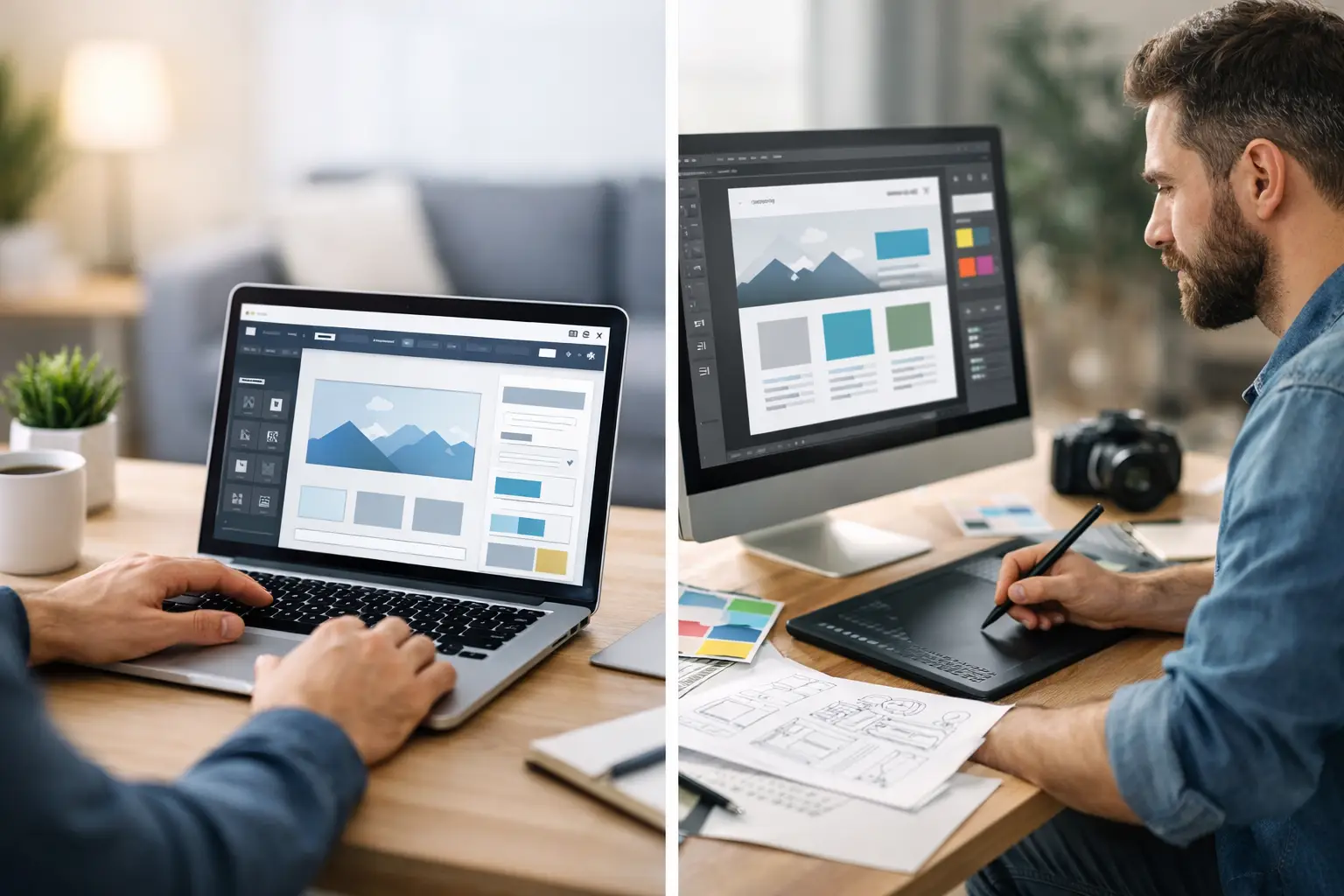
A plumber gets a call at 8:15 p.m. A dental patient searches for an emergency appointment from a phone. A restaurant guest wants to book a table before choosing another option. In each case, your website has seconds to make the next step obvious. That is why the website builder vs web designer decision is not really about who can make a prettier homepage. It is about what will reliably turn local searches into calls, bookings, and quote requests.
A website builder can be the right move. So can a web designer. The expensive mistake is choosing either one based on the lowest upfront price or the most polished portfolio, then discovering six months later that the site is not producing business.
Website Builder vs Web Designer: The Real Difference
A website builder is a platform that lets you assemble a site with templates, prebuilt sections, and drag-and-drop editing. You choose a layout, add your services, connect a domain, and publish. It is fast, accessible, and often inexpensive at the start.
A web designer, whether freelance or agency-based, creates the site around your business. The best designers do more than pick fonts and colors. They organize pages around how customers decide, build mobile-first call paths, write or guide conversion-focused content, and set up the technical foundation that supports local visibility and lead tracking.
The difference is not simply DIY versus done-for-you. It is template-led assembly versus strategy-led execution. A builder gives you the tools. A qualified designer should give you a system built around the action your customers need to take.
For a local HVAC company, that action might be an emergency call, a repair request, or a financing inquiry. For a law firm, it may be a confidential consultation. For a med spa, it could be an appointment request tied to a specific treatment. These are different buying situations. A generic template rarely accounts for them without careful work.
When a Website Builder Makes Sense
A builder is not a bad choice by default. It is practical when your website has a limited job and your team can realistically maintain it.
It can work well for a new business testing an idea, a solo operator with a tight budget, or a company that only needs a basic online presence while it builds referrals. If you have strong copy, quality photos, clear service details, and the discipline to keep the site current, a builder can get you live quickly.
It is also a reasonable option if your business does not depend heavily on website leads. Maybe most of your work comes through a commercial contract, an established network, or a marketplace profile. In that case, a simple site that confirms credibility may be enough for now.
But speed is only valuable if it does not create rework. Many owners spend weekends choosing layouts, resizing images, fighting mobile spacing, and trying to figure out why form submissions are not arriving. The monthly platform fee may be low, but the owner’s time is not free.
Builders also create a common false finish line: the site is published, so the project feels complete. Publishing is the starting line. If no one reviews page behavior, tests calls to action, improves service pages, or updates offers, the website slowly becomes another brochure that looks fine and underperforms.
When Hiring a Web Designer Is Worth It
A web designer is usually worth the investment when the site is expected to generate revenue consistently. That includes businesses where one qualified lead can cover a meaningful part of the build cost: roofers, dentists, attorneys, plumbers, chiropractors, restoration companies, and other high-value local services.
The right designer should start by asking business questions, not color questions. What services have the best margins? Which neighborhoods do you serve? What does a qualified lead look like? Do callers need immediate help, a price range, or proof that you are credible? What objections stop people from contacting you?
Those answers shape the website. A visitor with a burst pipe needs a tap-to-call button and clear availability. Someone researching veneers may need before-and-after proof, financing information, reviews, and an easy consultation path. A business law prospect may need reassurance about experience and confidentiality before filling out a form.
That is conversion engineering. It is not agency theater. It is removing friction between a customer’s intent and the action that starts a conversation.
A professional build should also account for details that templates often leave to the owner: page hierarchy, mobile usability, site speed, form routing, analytics, local search fundamentals, trust signals, image choices, and content updates after launch. None of these alone guarantees leads. Together, they determine whether a motivated visitor gets clear answers or gets lost.
The Cost Question Most Owners Ask Wrong
Website builders look cheaper because their upfront cost is lower. A professional designer looks more expensive because the strategy, build, and setup are visible on the invoice. But the useful comparison is not initial price. It is total cost to get a working lead asset.
A low-cost site that produces no calls is expensive. A higher-priced site that generates a steady flow of qualified inquiries can pay for itself quickly. The math depends on your customer value and close rate.
Say a local roofer earns several thousand dollars from an average project. If a stronger website creates even one additional qualified estimate request that becomes a job, the difference between DIY and professional work may be recovered immediately. For a restaurant, the value may show up through more reservations, private-event inquiries, and fewer customers abandoning the site because menus or hours are hard to find.
That does not mean every business should buy the most expensive custom site available. Overspending is real, too. A slow agency project with vague deliverables, long contracts, and no plan for leads is not a smart investment just because it is custom.
Ask what is included: Who owns the site? How long will launch take? Is there a clear plan for phone calls and forms? Who handles edits after launch? Can you see where inquiries come from? If the answers are fuzzy, the proposal is not ready.
What a Lead-Generating Local Website Needs
Whether you use a builder or hire help, your site needs to do a few jobs exceptionally well. It needs to state what you do and where you do it before visitors have to hunt for the answer. It needs to make the primary action obvious on mobile. It needs to show believable proof, such as reviews, outcomes, experience, licenses, photos, or process details. And it needs dedicated pages for the services people actually search for.
The homepage cannot carry the whole business. A lawn care company should not force every visitor through one broad page when people are searching for mowing, cleanup, landscaping, or seasonal services. A dental practice should not bury implant, emergency, and cosmetic treatment information beneath generic practice copy.
Each page should match a real customer question and move that customer toward a clear next step. That is how a website supports sales instead of merely presenting information.
A Better Way to Make the Decision
Choose a website builder if your needs are simple, your budget is genuinely limited, and you are prepared to own the writing, setup, testing, and updates. Be honest about that last part. Most owners do not lack intelligence or work ethic. They lack spare hours to become a part-time web strategist.
Choose a web designer if leads matter, competition is active, and a missed inquiry has real financial consequences. Prioritize a provider that understands your category and can explain the conversion logic behind the pages. A beautiful mockup is not enough.
There is also a practical middle ground: have a specialist build the revenue-critical foundation, then keep ongoing edits simple and responsive. That model gives owners speed and control without handing them another technical project. Macrolight Builder uses this approach with a focused rebuild process and ongoing management, because a local business site should not become outdated the moment it launches.
Before choosing either path, look at your current website on your phone and ask one blunt question: if a ready-to-buy customer lands here right now, do they know exactly what to do next? If the answer is anything short of yes, fix that before spending another dollar on traffic.

